Environmental Air Quality Monitoring
Air-quality standards are becoming more stringent, while monitoring strategies increasingly combine reference measurements, modelling and complementary measurement approaches. Higher spatial and temporal resolution is becoming increasingly important to understand local variability, pollution events and changing exposure conditions.
Related products
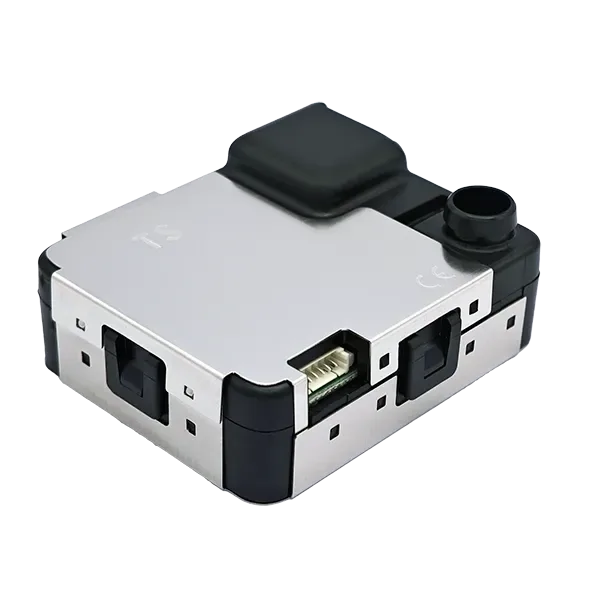
NextPM
The NextPM sensor is a next-generation solution for air quality monitoring, delivering real-time PM₁, PM₂.₅, and PM₁₀ measurements in µg/m³ and pcs/L.
Read more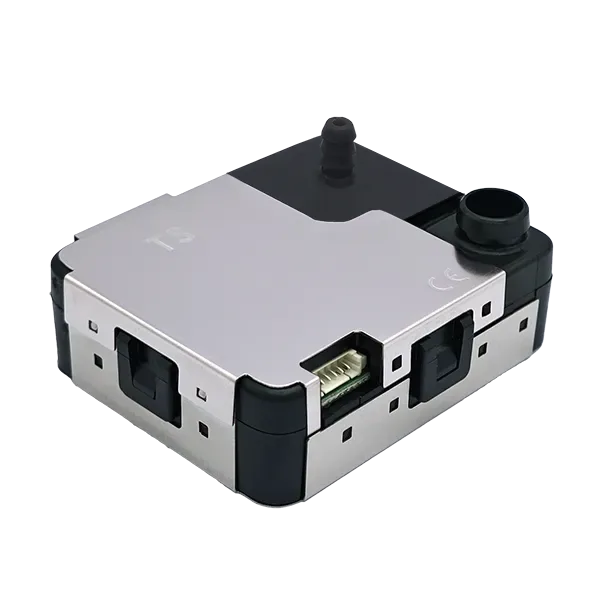
NextPM Advanced
Designed specifically for air quality measurement in ventilation ducts and HVAC systems, the NextPM Advanced replaces the internal fan with an end piece that connects to an external pump.
Read more
Air-quality monitoring requirements are evolving
Air-quality standards are becoming more stringent, while monitoring strategies increasingly combine reference measurements, modelling and complementary measurement approaches.
In the European Union, Directive (EU) 2024/2881 introduces stricter ambient air-quality limit values to be met by 2030, including an annual PM₂.₅ limit value of 10 µg/m³, down from the previous 25 µg/m³. Reference methods remain the basis for regulatory assessment, while the framework also provides for indicative measurements and modelling as complementary tools.
Stricter air-quality targets
Lower PM limits increase the importance of measurement uncertainty, stability and calibration.
Denser monitoring
More measurement points improve spatial coverage and help identify local variations that a limited number of fixed stations cannot capture.
More formal sensor evaluation
New standards and test protocols increasingly focus on documented performance rather than sensor price alone.
Limitations commonly associated with low-cost PM sensors
Low-cost optical PM sensors are often associated with measurement limitations linked to humidity, aerosol properties, particle-size discrimination, calibration transferability, drift and unit-to-unit variability. These limitations are not inherent to compact sensing itself. Their importance depends on sensor architecture, environmental control, calibration strategy and manufacturing consistency.
Humidity sensitivity
Hygroscopic particles can absorb water as relative humidity increases, changing their optical response and apparent particle size.
Aerosol dependency
Optical response depends on particle size, shape, density and refractive index. A calibration developed for one aerosol or location may not transfer directly to another.
Particle-size discrimination
PM₁, PM₂.₅ and PM₁₀ estimation depends on how effectively the sensor distinguishes different particle sizes, particularly when coarse particles are present.
Calibration transferability
Calibration improves quantitative performance, but results can depend on aerosol characteristics, environmental conditions and the reference used.
Drift & ageing
Optical contamination, component ageing and environmental exposure can change sensor response over time.
Unit-to-unit consistency
Differences between individual sensors become increasingly important when large monitoring networks are deployed.
NextPM was developed specifically to address several of these constraints at the measurement stage.
How NextPM addresses these measurement constraints
NextPM was developed around several of these known constraints, with design choices intended to improve measurement quality before post-processing and calibration are applied.
Dual-angle optical detection
Provides additional optical information for particle-size discrimination.
Active humidity management
Reduces the influence of hygroscopic particle growth before optical measurement.
Five particle-size bins
Provides additional information on particle-size distribution from 0.3 to 10 µm.
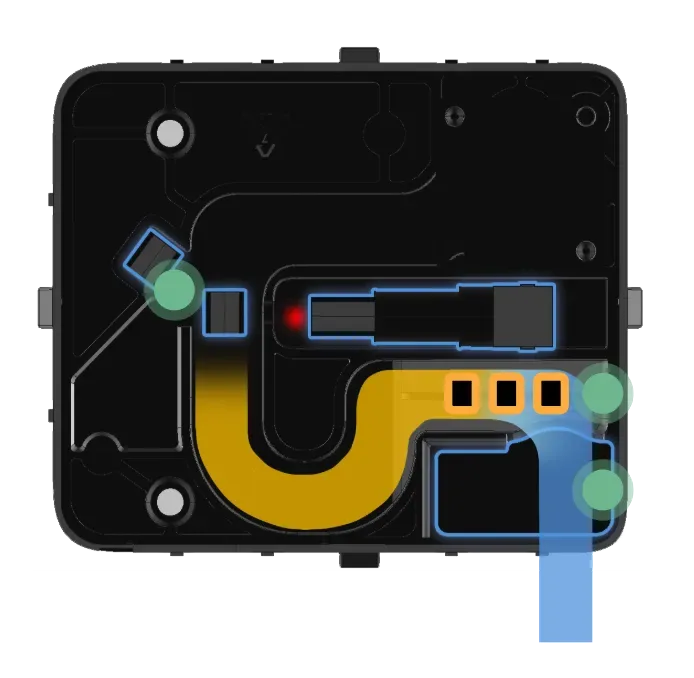
Long-term operation
Mechanical and airflow design features are intended to reduce contamination during long-term operation.
Calibration options
Different levels of calibration and verification are available depending on the application.
Independent evaluations and published performance data
NextPM has been evaluated in laboratory and field conditions by independent organizations and research teams.

Scientific publications
Peer-reviewed studies using or evaluating NextPM under different operating conditions.
View scientific publicationsComparative performance data
Published data and third-party evaluations compared across key sensor performance criteria.
View performance comparisonTest conditions, references and methodology are provided with each dataset.
Increasing spatial and temporal coverage with sensor networks
Reference monitoring stations remain essential for highly characterized measurements, regulatory assessment and long-term traceability.
Their cost, infrastructure and operating requirements nevertheless limit the number of locations that can realistically be monitored with reference instrumentation alone.
Higher-performance compact sensors such as NextPM provide a complementary approach: their measurement performance can be characterized and calibrated while their cost, size and integration format allow much denser deployment. This makes it possible to increase spatial and temporal resolution without requiring reference instrumentation at every measurement point.
Reference measurements remain important for characterization and calibration strategy. They can be used to adjust and interpret sensor-network data according to local aerosol characteristics and operating conditions, rather than simply correcting poor-quality measurements after deployment.
Reference monitoring
- Regulatory assessment
- Highly characterized measurement
- Traceability
- Calibration anchor
Higher-performance sensor network
- More measurement points
- Continuous observations
- Higher spatial resolution
- Higher temporal resolution
→ A denser and better-characterized monitoring network
Network densification
Increase the number of measurement points without deploying reference instrumentation at every location.
Hotspot detection
Identify spatial variations and local sources that may remain invisible between fixed monitoring stations.
Temporal resolution
Observe pollution events and short-term variations continuously rather than through isolated measurements.
Data comparability
Use a consistent sensing architecture across multiple locations and interpret results against reference measurements, calibration data and known operating conditions.
Sensor-network performance still depends on sensor quality, calibration strategy, aerosol characteristics, siting and long-term QA/QC.
Designing an air-quality monitoring system?
Sensor performance is only one part of the final measurement. Sampling, airflow, inlet design, enclosure, electronics, thermal conditions, communication, calibration strategy and long-term verification can all influence the quality of the data produced by the final system. TERA Sensor can support system design and integration, while TERA Tronics can extend the project through prototyping, industrialization and manufacturing.
FAQ
Yes, when their measurement performance is understood and appropriately characterized. Sensor architecture, environmental control, calibration strategy and manufacturing consistency all influence whether a given sensor is suitable for a specific monitoring application.
No. Regulatory assessment relies on reference-grade methods. PM sensors are generally used as complementary tools — for example under indicative measurement or modelling provisions — to increase spatial and temporal coverage rather than as a direct substitute for reference monitoring.
Hygroscopic particles absorb water as relative humidity increases, which changes their optical size and can lead to overestimated PM concentrations if not addressed. Managing humidity before the optical measurement stage reduces this effect.
Optical sensors respond to particle size, shape, density and refractive index, which vary between aerosol types and locations. A calibration developed for one aerosol may not transfer directly to another without adjustment.
Calibration requirements depend on the application. Factory-calibrated sensors provide standard performance, while applications requiring closer alignment with reference instruments typically use batch-level verification or individual calibration.
Deploying more measurement points than would be feasible with reference instrumentation alone makes it possible to observe local variations, short-term pollution events and areas that would otherwise fall between fixed monitoring stations.
Verification frequency depends on the application, the required data quality and local operating conditions. Periodic performance verification and, where required, co-location with reference instruments help confirm that sensor response has not drifted over time.
Yes. NextPM is designed for OEM integration, and TERA Sensor supports customers on sampling, airflow, electronics, firmware, mechanical integration and calibration strategy for station-level projects.