Portable Particle Monitoring for Exposure Studies
PMScan is a compact PM datalogger for mobile measurements, citizen science, research and exploratory field campaigns. It records PM₁, PM₂.₅ and PM₁₀ along a route, activity or measurement period without requiring a fixed monitoring station.
Related products
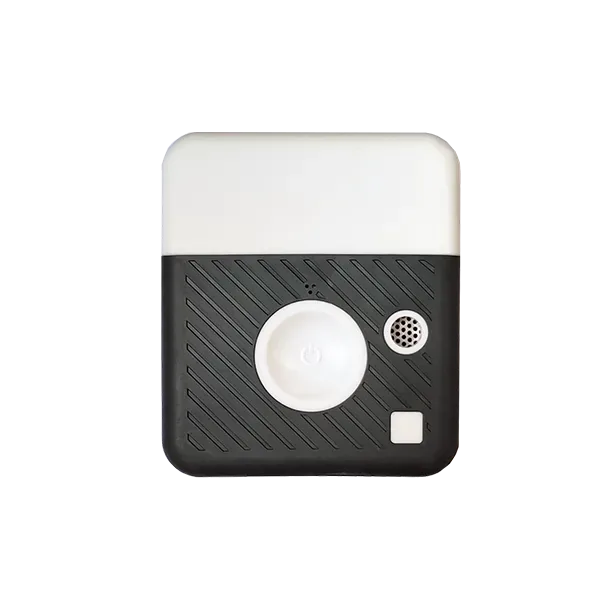
PMSCAN
A compact, battery-powered PM datalogger for mobile measurements, comparative studies and temporary field campaigns.
Explore PMScan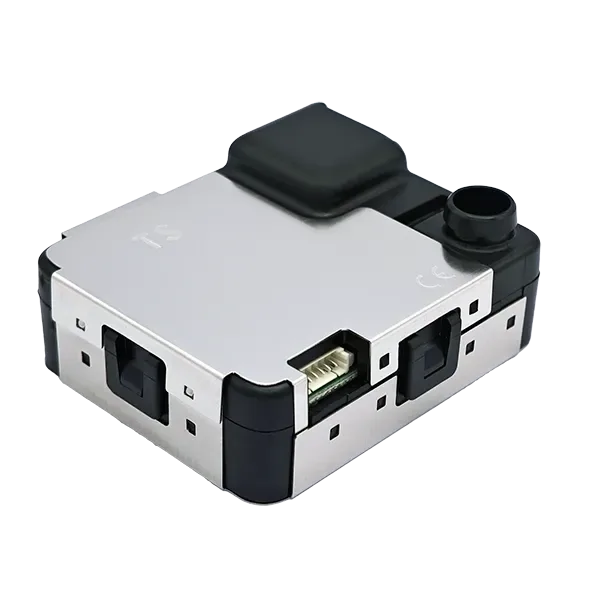
NextPM
The compact PM₁, PM₂.₅ and PM₁₀ sensing platform integrated inside PMScan and available for custom OEM monitoring devices.
Explore NextPM
Fixed monitors cannot describe every microenvironment
Particle concentrations can change between streets, transport modes, buildings, rooms and short activities. A fixed monitoring station cannot always describe these local and temporary variations.
A portable datalogger adds time and movement context to particle measurements. PMScan records the concentration in the air close to the instrument, helping users compare environments and identify periods that deserve further investigation.
These measurements support comparative and exploratory studies. They do not represent an inhaled dose or replace regulatory occupational exposure assessment.
Compare routes and microenvironments
Observe how particle concentrations change between streets, transport modes, indoor spaces or selected study locations.
Add context to fixed monitoring data
Complement stationary measurements with temporary data collected closer to the environments being investigated.
Capture short particle events
Record transient variations that may not be visible in periodic measurements or long-term averages.
Deploy measurements quickly
Carry out temporary measurement campaigns without installing a permanent monitoring network.
What portable PM measurements can—and cannot—show
Mobile particle measurements provide valuable time and location context, but their interpretation must remain consistent with the measurement objective and the sensing method used.
Proximity is not inhaled dose
PMScan measures particle concentrations in the air close to the instrument. It does not determine the quantity of particles inhaled or deposited in the respiratory system.
PM fractions are not occupational dust fractions
PM₁, PM₂.₅ and PM₁₀ are not equivalent to the inhalable, thoracic and respirable conventions used in occupational hygiene.
Aerosol properties influence optical measurements
Particle composition, density, shape and refractive index can influence the relationship between optical signals and estimated mass concentration.
Humidity can affect particle response
Hygroscopic particles may grow under humid conditions. Active humidity management helps improve measurement stability, but it does not remove every aerosol-related uncertainty.
Context must be recorded
Time, location, activity and measurement conditions are needed to interpret variations collected during a mobile campaign.
Particle chemistry is not identified
PMScan measures particle concentration and size-related information. It does not identify the chemical composition or toxicity of the particles detected.
PMScan is therefore best suited to exploratory measurements, comparisons, trend identification and field studies whose protocol reflects these measurement limits.
PMScan combines TERA Sensor’s NextPM sensing technology with battery power, local data storage and wireless communication in a portable instrument designed for field measurements.
PM₁, PM₂.₅ and PM₁₀
Record real-time particulate mass concentrations together with particle information across five size channels.
Compact and battery-powered
Carry the instrument along a route or place it temporarily at a selected measurement location.
Timestamped measurement history
Store measurements locally and retrieve the recorded data for comparison and subsequent analysis.
Active measurement architecture
Dual-angle optical detection, active airflow, humidity management and an anti-clogging design support stable measurements during field use.
Where portable PM measurements add useful context
PMScan supports applications where mobility, rapid deployment and time-resolved particle data are more important than a permanent monitoring installation.
Compare everyday microenvironments
Compare particle levels along walking or cycling routes, between transport modes or across selected indoor and outdoor environments.
Support exploratory field studies
Collect portable PM data during research campaigns, pilot studies or protocol development before deploying more specialized instrumentation.
Investigate temporary contamination events
Carry out short investigations around entrances, material transfers, maintenance operations or adjacent environments to identify periods requiring closer examination.
PMScan is not intended for ISO cleanroom classification. Use SafyrOPC when ISO 21501-4 particle counting is required.
Compare selected locations or activities
Perform exploratory measurements around equipment, work areas or temporary operations to identify where a more formal measurement plan may be required.
From individual readings to a time-resolved field record
PMScan helps users follow how particle concentrations change during a route, activity or measurement period. The resulting record can be used to compare conditions and identify intervals that deserve additional investigation.
Add mobility to the measurement
Collect particle data beyond a fixed station and closer to the microenvironments included in the study.
Compare different conditions
Compare routes, rooms, transport modes, time periods or operating conditions using the same portable instrument.
Identify transient variations
Locate short concentration increases within the recorded timeline and relate them to field observations.
Build a reusable dataset
Preserve timestamped measurements for visualization, comparison and subsequent scientific analysis.
Prepare further investigations
Use exploratory results to select locations, periods or situations that require more specialized measurement methods.
Designing a portable particle-monitoring device or field study?
PMScan provides a ready-to-use solution for portable measurements, while NextPM can be integrated into custom mobile instruments, research equipment and connected measurement systems.
TERA Sensor can support sensor selection, measurement architecture, electronic integration, communication and prototype development. Through TERA Tronics, projects can also be supported through industrialization and series manufacturing.
- TERA Sensor: particle measurement, sensor selection, sampling architecture, integration and calibration.
- TERA Tronics: electronics, prototyping, industrialization and series manufacturing.
FAQ
PMScan records PM₁, PM₂.₅ and PM₁₀ mass concentrations and particle information across five size channels. Measurements are timestamped and can be stored for subsequent visualization and analysis.
No. PMScan measures particle concentrations in the air close to the instrument. Actual inhaled dose depends on breathing rate, instrument position, particle properties and respiratory deposition, which PMScan does not determine.
No. PMScan is intended for exploratory, comparative and time-resolved field measurements. It does not replace regulatory sampling methods, gravimetric analysis or occupational exposure assessments performed according to the applicable regulations and standards.
No. PM fractions and occupational hygiene dust fractions use different sampling conventions. PMScan data should not be interpreted as a direct measurement of inhalable, thoracic or respirable workplace dust.
Yes. Its portable format and data-logging capabilities make it suitable for comparing routes, transport modes and selected indoor or outdoor microenvironments, provided that the study protocol and measurement limits are clearly documented.
PMScan can support exploratory studies, pilot campaigns and comparative field measurements. Researchers should define an appropriate protocol and, where required, evaluate the instrument against the reference method relevant to their study.
No. PMScan is not intended for cleanroom classification. SafyrOPC should be used when ISO 21501-4 particle counting and cleanroom-compatible monitoring are required.
No. PMScan records particle concentration and size-related optical information. Identifying particle composition or confirming a specific source requires additional analytical methods.
Humidity can change the optical response of hygroscopic particles. The NextPM sensing module integrated into PMScan includes active humidity management to improve stability, but aerosol properties must still be considered when interpreting the data.
Yes. PMScan can be carried during a mobile campaign or placed temporarily at a selected location. The installation and protocol should remain consistent with the objective of the study.
Planning a mobile PM study or portable monitoring device?
Tell us about your measurement objective. Our team will help you determine whether PMScan or an OEM integration based on NextPM is the appropriate solution.