Particle monitoring in underground railway environments
Platforms, trains, transitions to the outside: in underground railway environments, the aerosol changes from place to place, and an ambient-air sensor measures it poorly. TERA Sensor brings a measurement adapted to this environment, in two forms: the NextPM EFS sensor to integrate into your system, and the portable PMSCAN EFS instrument, ready to measure.
Related products
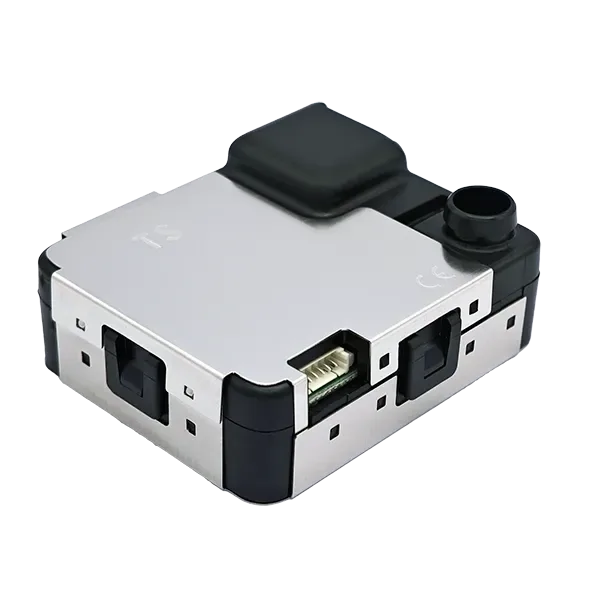
NextPM
OEM particle sensor with number-to-mass conversion adapted to railway aerosol, to integrate into your station or device.
Discover NextPM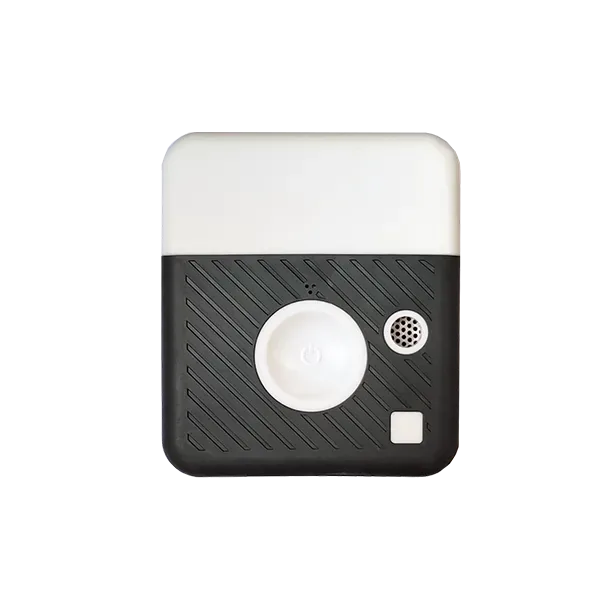
PMSCAN
Battery-powered portable instrument built on the NextPM EFS sensor, to measure on the move or at a temporary location.
Discover PMSCAN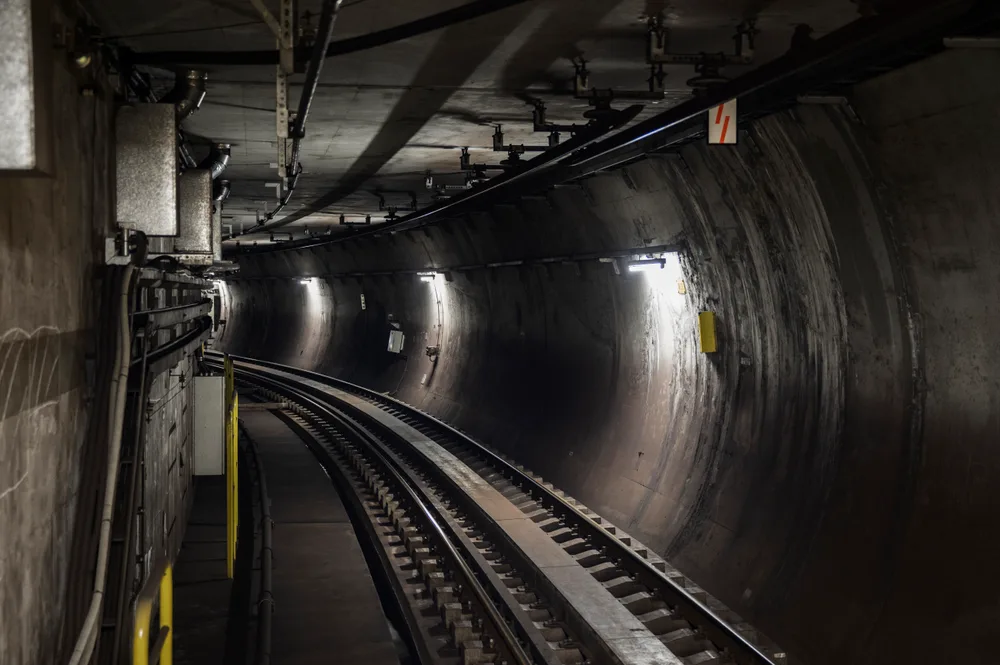
Distinctive air, levels that depend on place and time
Braking, wheel–rail contact, resuspension, outdoor air: the air in underground railway environments (EFS in French) holds a mix of particles that is often rich in metals and varies with rolling stock and operations.
Depth, station geometry, ventilation, traffic: levels change from one platform to the next and from one hour to the next. To act, you first need an accurate measurement in this environment, then to put it in context: where, when, under which conditions.
What current sensors struggle with underground
A sensor designed for ambient air does not automatically deliver accurate mass measurements underground. Six limits keep coming up in the field.
From light to mass
The optical signal depends on particle size, shape and density. Railway aerosol differs from the aerosol used to calibrate ambient-air sensors, and mass concentrations reflect that.
An aerosol that changes
Platforms, trains and outdoor air do not hold the same mix. Research in New York had to apply separate corrections underground and above ground: a single setting cannot keep up.
Peaks that disappear
An acquisition interval or an average that is too wide wipes out short episodes, yet those are the ones that matter for exposure.
Delicate sampling
Inlet, flow, tubing length: on a platform or inside a train, what reaches the sensor is not always what is in the air.
A response that drifts
Humidity, deposits and clogging change a sensor’s response over the months.
Too coarse a reading
Without size information, it is impossible to tell where variations come from: braking, resuspension or outdoor air.
Two products for a measurement adapted to railway aerosol
The same EFS adaptation, as a sensor to integrate or as an instrument ready to measure. The sensor improves the measurement at the source; the instrument makes it portable and logged.
NextPM EFS
Optical particle sensor whose number-to-mass conversion is tuned to railway aerosol by a dedicated algorithm: the PM₁, PM₂.₅ and PM₁₀ it returns are consistent with the nature of the particles in this environment.
- Number-to-mass conversion adapted to EFS
- PM₁, PM₂.₅ and PM₁₀, five size classes from 0.3 to 10 µm
- Two-angle detection, active humidity management, anti-clogging design
- UART and Modbus communication
- Fixed or on-board use, depending on the system that integrates it
- Improves the measurement; mapping and tracking belong to your system
PMSCAN EFS
The NextPM EFS sensor in a stand-alone, battery-powered device that logs time-stamped measurements and transmits them over Bluetooth. No development: you measure as soon as it is switched on, on a platform, inside a train, along a route.
- Built-in NextPM EFS sensor, same adaptation
- Battery-powered, stand-alone, portable
- Time-stamped logging in internal memory
- Bluetooth link, iOS and Android apps
- Measurement on the move or at a temporary location
- Measures; describing an exposure or mapping belongs to the study
NextPM EFS and PMSCAN EFS provide particle concentrations adapted to the environment. Neither of them, on its own, describes an exposure, maps a station or assesses a mitigation action: those results belong to the study and the analysis system that use them.
What PMSCAN EFS makes possible
In the hands of a team running the study, its recordings serve three approaches.
Compare places and periods
Successive readings at several points of a station and at several times give the study the material to identify the areas and situations to address first.
Follow a route
Carried along a journey, the instrument records the concentrations met platform after platform, train after train. Matched with places and durations, they let the study go beyond the instantaneous concentration.
Document a mitigation action
Measurements before and after, or against a control area, give the assessment of a filtration or ventilation system the data it needs, with traffic still to be accounted for. This is the kind of approach AIRLAB is exploring in stations.
Mapping, journey exposure, the outcome of an action: these results belong to the study and the analysis system that produce them. PMSCAN EFS is their measuring instrument; NextPM EFS, the sensor integrated into a system designed to produce them.
Planning a railway measurement project?
Sensor performance is only one part of the final measurement. Sampling, airflow, inlet design, enclosure, electronics, thermal conditions, communication, calibration strategy and long-term verification can all influence the quality of the data produced by the final system. TERA Sensor can support system design and integration, while TERA Tronics can extend the project through prototyping, industrialization and manufacturing.
FAQ
A number-to-mass conversion configuration dedicated to the aerosol of underground railway environments, driven by a specific algorithm. It equips the NextPM EFS sensor and, through it, the PMSCAN EFS instrument.
NextPM EFS if you design your own station or device and want to build the measurement into it. PMSCAN EFS if you want to measure without development, on the move or at a temporary location. The measurement is the same; what changes is what you build around it.
NextPM is an OEM sensor with a UART / Modbus interface. The enclosure, power supply, sampling and data transmission belong to your system; we support you in defining them.
No. It records time-stamped concentrations near the instrument. Describing an exposure or mapping variations requires a protocol, records of place and duration and data processing: that is the work of the study, which PMSCAN EFS feeds.
No. NextPM measures particle numbers and estimated mass concentrations, not chemical composition. Characterising metals requires dedicated sampling and analysis.
They describe levels and how they vary. On their own, they are not enough to conclude on compliance or on an individual health risk.
They document the context and constraints of EFS measurement; they are not a certification of NextPM or PMSCAN.
Airparif — Diagnostic du dispositif de surveillance RATP (2022)
Ineris — Mesures harmonisées en EFS (2023)
Dinh et al. — Long-Term Evaluation of Optical Particle Counters, Chemosensors (2025)
Particulate matter concentration and composition in the New York City subway system (2023)
Ineris — Évaluation in situ de systèmes capteurs en EFS (2023)
AIRLAB — Évaluation des systèmes de dépollution en gare
SNCF / ASFERA — Caractérisation et identification des sources de particules en EFS (2023)
SNCF Transilien — Qualité de l’air en gare
A measurement need for this application?
Let’s talk about your project — our teams will point you to the right sensor or instrument.